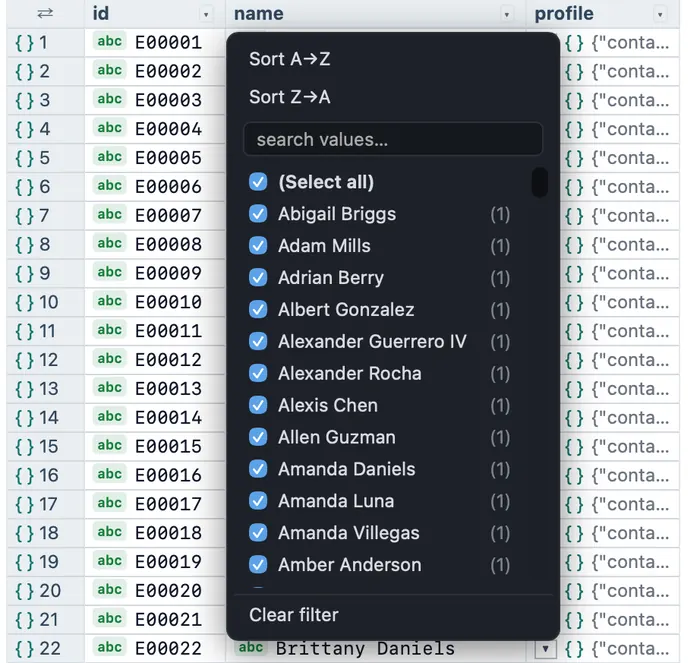
Open newline-delimited JSON, JSONL, or structured log files as one table with one record per line. Sort columns, filter values, run structural queries, and export the result without uploading the file.
NDJSON—also called JSON Lines or JSONL—stores one complete JSON value on each line. It works well for application logs and streaming exports, but ordinary JSON formatters often expect one enclosing array and reject it.
JSON Analyzer recognizes .ndjson, .jsonl, and log files. Each valid line becomes a row. Nested fields remain visible in the grid and can be flattened into dotted columns when you need a conventional table.
$.rows[?(@.status=="ERROR")].Production logs frequently contain identifiers and internal data. The viewer processes ordinary files locally, so you do not need to paste sensitive logs into an online formatter.
Open a sample in the browser, or install the native app for a dedicated local workflow.
Try JSON Analyzer